

AED program · Houston
An AED at home, for a child at risk.
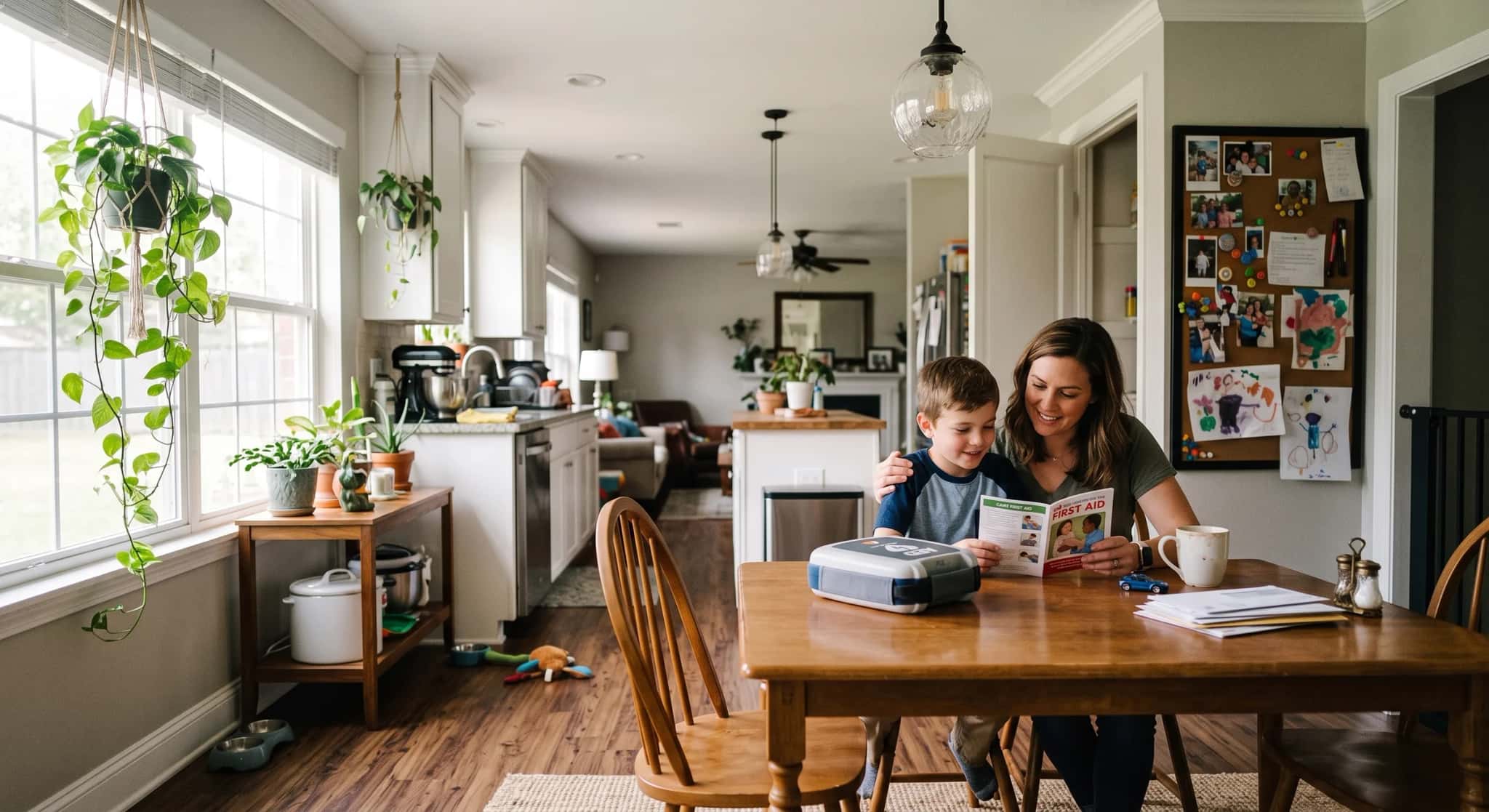
If your child lives with a heart rhythm disorder, we may be able to place a defibrillator in your home — and show you how to use it, in person.
A quick check
Is this program for your family?
Tap each one that's true. It takes ten seconds, and it tells you straight away whether to keep going.
Sounds like a match.
The application takes about five minutes — and we've already ticked these four for you.
Asking on behalf of a school, daycare or another organization? Our program is built around families for now — write to us and we’ll keep you in mind as it grows.
Why at home
Three numbers that decide it.
71%
happen at home
It happens where you live
About seven in ten cardiac arrests outside a hospital happen at home — not at a gym, a school or a stadium. The device that matters is the one in the house.
Source: CARES 2024 report, via the Sudden Cardiac Arrest Foundation
9%
survive one at home
Home is where the odds are worst
Survival to hospital discharge is 8.9% when an arrest happens in a residence, against 21.1% in a public place — where AEDs hang on walls and bystanders are more likely to start CPR.
6%
lost every minute
Minutes are the whole story
Every minute before the first shock takes about six percent off the chance of survival. In a 2024 study of 3,700 witnessed arrests, 70% of people survived when the shock came within six minutes — 33% after ten.
How it works
Four beats, start to finish.
Apply5 min
The form below is the whole application. Nothing to print, no account to make.
A person reads it
Someone on our team, every time. If we need to understand your child's care better, we'll email and ask.
We talk it through
Where it'll live, who'll reach for it, and what to do when the pads and battery expire.
Pick-up in Houstonin person
We meet, switch it on together, and you take it home.
The application
Five minutes. Three short steps.
Everything here comes straight to our team.
This form is not an emergency service.
If someone is in cardiac arrest right now, call 911 and start chest compressions. If there's an AED nearby, switch it on — it will tell you exactly what to do.
Knowing what to do matters as much as the device.
An AED tells you what to do, but the compressions in between are yours. We teach both, free, to any family who wants to learn.